CENTER FOR CLIMATE CHANGE & ENVIRONMENTAL MANAGEMENT
Menu
I SDG
Climate Action
Low Carbon Energy Use
CENTRAL LUZON STATE UNIVERSITY
2026
Research, Innovation and Extention
Center for Climate Change and Environmental Managememt
0%
implementation of paperless transaction, paper recycling and banning of single-use plastics
0%
water pipes replaced and conserved water through high efficiency water fixtures
0%
energy from low carbon sources
0
metric tons of greenhouse gas avoided from stationary fuels by using Biogas Digester
0
seedlings collected in 2025
by students, faculty and staff
0
kilowatt-hours of renewable electricity produced from renewable energy
7.96 GJ
Total EnergyUsed
32.061 GJ
Low Carbon Energy Sources
| UNIVERSITY CARBON EMISSIONS 2025
The university’s energy usage 32.061 GJ on 2025 with 25% coming from low carbon energy source (7.96 GJ). The university has taken actions to reduce the emission prior to 2021-2029 by shifting a lot of its old equipment to environment-friendly and energy efficient equipment ranging from light bulbs to air conditioner to refrigerator. Additionally, the University have tree planting activity as a clearance for graduating students. Each student will plant a native tree species around the university; it is symbolic yet helpful for the reduction of GHG emission. The researchers in CLSU created a low-cost biogas digester which can replace the LPG tanks. Hopefully, in the future, a lot of biofuels like biodiesel will be created in order to shift from the high emission fuel to low emission fuel in order to lessen both stationary combustion and mobile combustion.
| STRATEGIES FOR ACHIEVING NEUTRALITY REDUCTION
RENEWABLE ENERGY
OFFSETTING
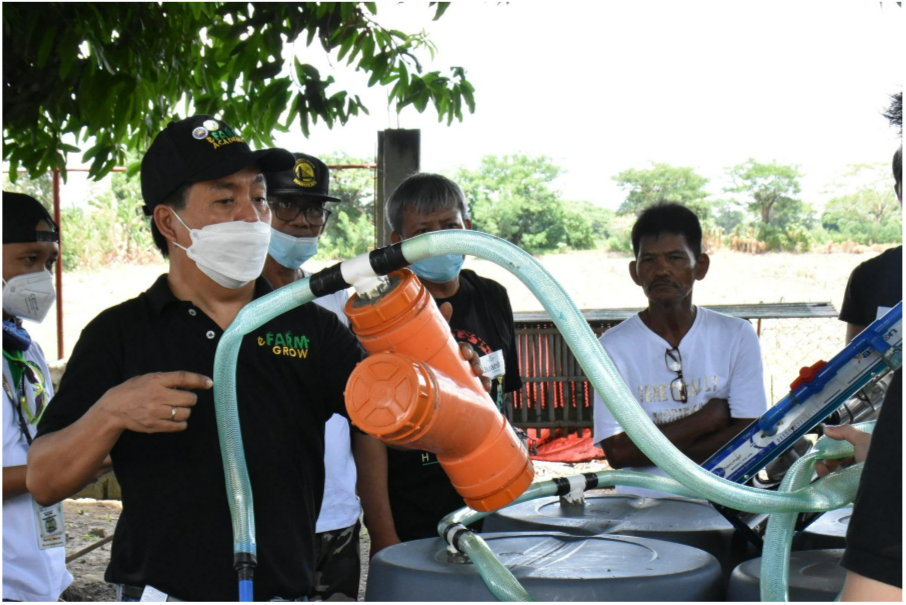
BIOGAS DIGESTER
We save the equivalent of:
0 km
driven by an average gasoline-powered vehicle.
0 L
of gasoline consumed.
0 L
of diesel consumed
0 Kg
of coal burned
0 LPG (11kg)
LPG tank for cooking
2.349 GJ (from 2023)
OFFSETTING
0.216 MT (from 2023)
CO2 AVOIDED
| CARBON SEQUESTERED BY TREES
0
MT of CO2
PLEDGE OF COMMITMENT
The University is sincere in achieving carbon neutrality in order to fight climate change. The University pledges to achieve carbon neutrality in 2029 by making these targets possible. As a renowned higher education and research institution, CLSU will make great efforts to combat the climate change.
| CARBON NEUTRALITY 2025
Climate change refers to a statistically significant disparity in either the mean state of the climate or in its variability, persisting for an extended period of time which usually decades or longer. Climate change may be due to natural internal processes or external forcing, or to tenacious anthropogenic changes in the composition of the atmosphere or in land use (IPCC). Human activity worsen and fasten the effects of climate change.
Greenhouse gases are transparent to definite wavelengths of the sun’s radiant energy, allowing them to enter deep into the atmosphere or all the way into the Earth’s surface. Greenhouse gases and clouds inhibit some of infrared radiation from escaping, trapping the heat near the Earth’s surface where it warms the lower atmosphere. Alteration of this natural barrier of atmospheric gases can elevate or lower the mean global temperature of the Earth (NASA). Greenhouse gas helps our world to regulate the temperature but due to the drastic amount of GHG present in our world, it becomes unbalanced and it results in the birth of climate change.
Climate change mitigation denotes to efforts to cut or avoid emission of greenhouse gases. New technologies and renewable energies, making older equipment more energy efficient, or varying management practices or consumer behavior can mean mitigation (UN). Human activities are the main problem of GHG emission but also the human efforts will be the key to mitigate the emissions.
| WASTE MANAGEMENT
Waste management plays a vital role in promoting environmental sustainability and reducing the negative impacts of human activities on the environment. Improper waste disposal and the increasing generation of waste contribute to pollution, resource depletion, and greenhouse gas emissions. Effective waste management practices, including waste segregation, recycling, composting, and proper disposal, are essential in minimizing these impacts.
At Central Luzon State University (CLSU), sustainable waste management is promoted through initiatives that encourage responsible waste segregation, resource recovery, and waste reduction.
Waste Tracking 2025
Waste Recycled
0 kg
Waste sent to Landfill
0 m3
| SAKOW POLICY
Read through campus environmental policies, RA 9003 guidelines, and the principles of the SAKOW System.
| PROJECT SAFE
Enhancement of the system for Agriculture and Fisheries Education through the integration of Green and Remote Sensing Technologies Towards Food Security, Sustainability, Health and Safety of the Environment (SAFE>GRS>FOSHE) https://projectsafe-clsu.com/
| AWARENESS
| Formulation of the Local Climate Change Action (LCCAP)
Spearheading the formulation of the Local Climate Change Action Plan (LCCAP)